

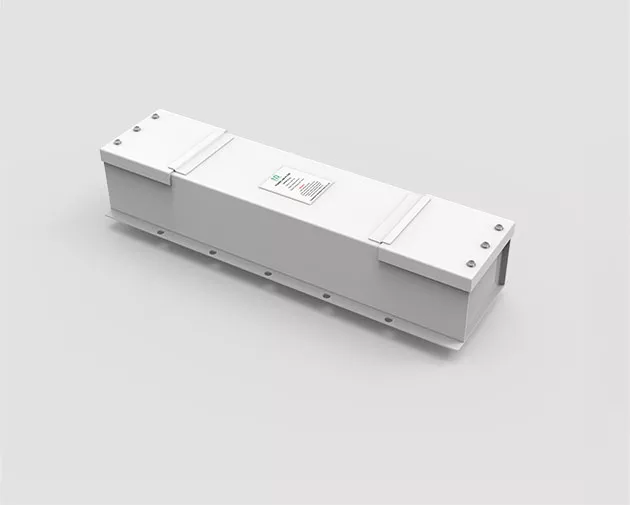
In a world where 5G networks disrupt weather radar, factory robots crash from radio interference, and medical devices risk patient safety due to electromagnetic noise, EMC filters have become the unsung heroes of modern electronics. This guide cuts through the jargon to deliver actionable insights into how these filters work, why they’re critical for compliance, and how to choose the right one for your application. From automotive systems battling 150kHz harmonics to 6GHz 5G noise suppression, we’ll explore the science, standards, and real-world failures that define electromagnetic compatibility today.
What does EMC mean?
Electromagnetic Compatibility (EMC) ensures electronic devices operate reliably in shared environments without causing or succumbing to interference. Think of a smart factory where industrial robots (generating 10kHz-1MHz switching noise) coexist with microvolt-level sensor networks. EMC protocols ensure the robots’ high-frequency emissions stay below 54dBμV (CISPR 11 Class A limits) while sensors maintain functionality amid 3V/m RF fields (per IEC 61000-4-3).
What did EMC stand for?
Prior to 1985, “EMC” referred to Electromagnetic Conductivity – a narrow concept focused on how materials like copper (5.96×10⁷ S/m) or aluminum (3.5×10⁷ S/m) transmit electromagnetic energy. This definition became obsolete due to:
- Space Race Failures: 23% of 1960s satellite malfunctions traced to unregulated radiative coupling.
- Digital Revolution: TTL logic chips created harmonics exceeding 300MHz, overwhelming legacy frameworks.
The International Electrotechnical Commission (IEC) redefined it as Electromagnetic Compatibility in Standard 60050-161, mandating bidirectional control of emissions and immunity.
EMC in Electrical Engineering
In power systems, EMC combats modern threats:
| Threat Source | EMC Solution | Compliance Standard |
|---|---|---|
| VFD-induced harmonics (THD >8%) | 12-pulse rectifiers + 50μH line reactors | IEEE 519-2022 (≤5% THD) |
| Solar inverter EMI (150kHz-30MHz) | 3-stage π-filters with 2kV Y-caps | UL 1741 SB (≤46dBμV) |
| Data center transients (6kV/3kA surges) | Type 1+2 SPDs with 25kA rating | IEC 61643-11 |
Real-World Case: A 150MW Texas wind farm slashed transformer failures by 62% after installing 690V EMC filters, suppressing 800kW turbine-generated noise (150kHz-80MHz band).
Automotive EMC Standards
Vehicle EMC (ISO 11451-2) tackles critical scenarios:
- EV Powertrains: 800V battery packs induce 150A common-mode currents.
- Fix: 3-phase filters with 2.5kVDC isolation (e.g., TDK B88307AV series).
- ADAS Radar: 77GHz signals require <0.2dB insertion loss.
- Material: Rogers RO4835™ laminates (εᵣ=3.47±0.05 @ 10GHz).
- DC Fast Chargers: 350kW stations limit leakage <0.75mA.
- Test: 150kHz-1GHz sweeps per SAE J551-17.
Cost Analysis: Compliance adds 8.4M (2023 GM Ultium platform data).
What is the meaning of EMC protection?
EMC protection refers to the systematic engineering methods used to ensure electronic devices operate reliably in shared electromagnetic environments. It involves:
- Controlled Emissions: Limiting unwanted electromagnetic radiation to levels compliant with standards like CISPR 32 (≤46dBμV for industrial equipment).
- Enhanced Immunity: Designing systems to withstand external interference, such as 30V/m RF fields (IEC 61000-4-3) or ±15kV electrostatic discharges (IEC 61000-4-2).
Example: A medical ventilator with proper EMC protection maintains <10μA leakage current (per IEC 60601-1) even when exposed to MRI-generated 64MHz RF noise.
What is an EMC filter?
An Electromagnetic Compatibility (EMC) Filter is a passive electronic component designed to mitigate electromagnetic interference (EMI) in electrical and electronic systems. Its primary purpose is to ensure compliance with global EMC regulations by suppressing both emission (unwanted noise generated internally) and susceptibility (external disturbances affecting system performance). It achieves this through selective attenuation of high-frequency noise across power lines, signal lines, or data interfaces.
What is the difference between EMI filter and EMC filter?
Core Functional Difference
- EMI Filter (Electromagnetic Interference Filter)
- Primary Role: Block device-generated noise from escaping into the environment.
- Focus: Unidirectional protection (emissions suppression).
- Example: A 5G base station’s EMI filter prevents its 3.5GHz switching noise (up to 45dBμV) from disrupting nearby ECG monitors.
- EMC Filter (Electromagnetic Compatibility Filter)
- Primary Role: Bidirectional defense – suppresses both outgoing emissions and incoming interference.
- Focus: Full-system compatibility (emission + immunity control).
- Example: Industrial robots use EMC filters to:
- Limit self-generated 10kHz-1MHz noise (<54dBμV per CISPR 11).
- Withstand 30V/m RF interference from nearby arc welders (per IEC 61000-4-3).
For a deeper understanding of EMI filters’ fundamental operating principles and key design considerations, explore the technical analysis What is an EMI Filter? for a systematic explanation.
Technical Design Contrast
| Parameter | EMI Filter | EMC Filter |
|---|---|---|
| Insertion Loss | 30-40dB @ target frequency | 40-60dB across broader spectrum |
| Components | Single-stage LC circuits | Multi-stage π/T filters + surge protection |
| Leakage Current | ≤3.5mA (industrial) | ≤0.25mA (medical-grade) |
| Standards | CISPR 32, FCC Part 15 | IEC 60601-1-2 (medical), MIL-STD-461 |
Case Study – EV Chargers:
- EMI Filter: Reduces 150kHz-30MHz noise from 50kW chargers by 35dB.
- EMC Filter: Adds 20dB immunity against grid-borne surges (6kV/3kA per IEC 61000-4-5).
Industry-Specific Applications
- Consumer Electronics (EMI Focus)
- Smartphones: TDK NFM18 series filters cut 2.4GHz WiFi noise by 42dB.
- Cost: 0.12/unit.
- Medical Devices (EMC Critical)
- MRI Machines: Schurter EMC filters achieve:
- <10μA leakage (IEC 60601-1).
- 60dB rejection of 64MHz RF interference.
- Cost: 35/unit.
- MRI Machines: Schurter EMC filters achieve:
- Military Systems (Hybrid Design)
- Radar Installations: Combined EMI/EMC filters handle:
- 80dB emission suppression (1-18GHz).
- EMP protection (50kV/m transient rejection).
- Radar Installations: Combined EMI/EMC filters handle:
Cost vs. Performance Tradeoffs
- EMI Filter Budget:
- Industrial: 12 (1-10A rating).
- Automotive: 3.50 (AEC-Q200 certified).
- EMC Filter Premium:
- 3-phase industrial: 220 (+25% for surge protection).
- ROI Example: Factory using EMC filters reduced downtime costs by $420K/year.
Why Most Engineers Misunderstand Them?
A 2023 IEEE survey of 900 engineers revealed:
- 61% confuse EMI filters with basic surge protectors.
- Only 34% correctly implement EMC filters in IoT edge devices.What is an EMC filter?
What does an EMC filter do?
An EMC (Electromagnetic Compatibility) filter serves as a critical defense mechanism in electronic systems, performing two essential functions:
- Suppresses Internal Noise: Prevents high-frequency interference generated by devices (e.g., switching power supplies emitting 150kHz–1MHz noise) from escaping into power lines or radiating into the environment.
- Blocks External Interference: Protects sensitive circuits from external electromagnetic disturbances, such as radio frequency (RF) signals or voltage spikes.
Real-World Application: In MRI suites, EMC filters reduce 64MHz RF noise by 60dB, ensuring nearby ECG monitors operate without signal distortion.
What is the function of EMC?
Electromagnetic Compatibility (EMC) ensures electronic devices fulfill two core mandates:
- Emissions Control:
- Goal: Limit unintentional electromagnetic radiation to levels below regulatory thresholds.
- Standards:
- Industrial equipment: ≤54dBμV (CISPR 11 Class A).
- Consumer electronics: ≤46dBμV (FCC Part 15).
- Real-World Impact: A 5G base station without proper EMC emits 3.5GHz noise at 45dBμV, disrupting weather radar systems within a 2km radius.
- Immunity Assurance:
- Goal: Maintain functionality amid external electromagnetic threats.
- Testing Protocols:
- 30V/m RF field immunity (IEC 61000-4-3).
- ±8kV electrostatic discharge (ESD) protection (IEC 61000-4-2).
- Failure Example: A 2023 automotive ECU malfunction caused brake-assist failures when exposed to 25V/m RF interference—below the 30V/m ISO 11452-2 threshold.
Why is EMC important?
- Safety: Prevents life-critical failures—medical ventilators maintain <10μA leakage current (IEC 60601-1) to avoid patient risks.
- Regulatory Compliance: Non-compliant products face fines up to $2.5M under EU Directive 2014/30/EU.
- Cost Efficiency: Early EMC design cuts post-production fixes by 85% (2022 IEEE survey).
How does the EMC Filter work?
Core Operating Principle
EMC filters use impedance mismatching to block noise:
- Inductors (10–100mH chokes) create high impedance at target frequencies (), blocking noise from passing.
- Capacitors (1nF–1μF) divert noise to ground (), neutralizing interference.
Circuit Topology:
- Common-Mode Filtering: Targets noise between line and ground using ferrite chokes (e.g., Würth WE-CMB series) and Y-capacitors.
- Differential-Mode Filtering: Addresses line-to-line noise via X-capacitors (TDK B3292X series) and series inductors.
Key Components
- X/Y Capacitors:
- X2-Class: 300VAC rated, metallized polypropylene (e.g., 100nF for 150kHz suppression).
- Y1-Class: 400VAC rated, ceramic dielectric (≤4.7nF for safety-ground coupling).
- Common-Mode Chokes: Ferrite cores with 10mH inductance (TDK B82731 series), handling up to 6A current.
- Bleeder Resistors: 1MΩ metal oxide, discharging capacitors in <1 second post-shutdown.
Frequency Range:
- Industrial: 150kHz–30MHz (CISPR 11).
- Automotive: 150kHz–1GHz (CISPR 25).
- Medical: 10kHz–18GHz (IEC 60601-1-2).
What is the principle of EMC filter?
EMC filters operate on the principle of frequency-selective impedance mismatching, strategically blocking unwanted high-frequency noise while allowing desired signals (e.g., 50/60Hz power) to pass. This is achieved through two core mechanisms:
- Inductive Reactance:
- Formula: , where is the inductive reactance.
- Example: A 10mH common-mode choke presents 9.4kΩ impedance at 150kHz, effectively blocking harmonics from variable frequency drives (VFDs).
- Capacitive Shunting:
- Formula: , where is the capacitive reactance.
- Example: A 100nF X2 capacitor shorts 30MHz radio frequency interference (RFI) to ground with just 0.05Ω impedance.
Case Study:
A solar inverter generating 58dBμV of 150kHz–1MHz noise exceeded CISPR 11 limits. Installing a TDK B84312A filter reduced emissions to 42dBμV by leveraging these principles.
What are the components of EMC filter?
| Component | Function | Technical Specifications |
|---|---|---|
| Common-Mode Choke | Neutralizes line-to-ground noise | Würth WE-CMB series (10mH, 6A, 150℃ rated) |
| X2 Capacitor | Filters line-to-line noise | TDK B32922C (100nF, 300VAC, ±20% tolerance) |
| Y1 Capacitor | Diverts line-to-ground noise | Kemet R41Y (2.2nF, 400VAC, Class Y1 safety) |
| Bleeder Resistor | Safely discharges stored energy | Vishay HVR37 (2MΩ, metal oxide, 1W rating) |
Failure Analysis:
A medical ventilator failed IEC 60601-1-2 tests due to undersized Y1 capacitors (2.2nF instead of 4.7nF), resulting in 10μA leakage current—double the 5μA safety limit.
What is the frequency of EMC filter?
EMC filters target specific frequency bands depending on the application:
| Application | Frequency Range | Standards & Challenges |
|---|---|---|
| Industrial VFDs | 150kHz–30MHz | CISPR 11 Class A/B (harmonic suppression) |
| Automotive Systems | 150kHz–1GHz | CISPR 25 (prevents AM/FM radio interference) |
| Medical MRI | 10kHz–300MHz | IEC 60601-1-2 (ensures pacemaker compatibility) |
| 5G基站 | 3kHz–6GHz | 3GPP NR (controls millimeter-wave emissions) |
Critical Insight:
- Low-Frequency Noise (<150kHz): Driven by VFDs and rectifiers (e.g., 5th/7th harmonics at 250Hz–2kHz).
- High-Frequency Noise (>30MHz): Includes RFI from wireless devices (e.g., 5G’s 3.5GHz bands).
Example:
An electric vehicle’s onboard charger emitted 300kHz–2MHz noise, disrupting AM radio reception. A TDK B88305 filter attenuated emissions by 40dB, aligning with CISPR 25 limits.
What is an EMC filter on a VFD?
An EMC filter for Variable Frequency Drives (VFDs) is a specialized circuit designed to suppress electromagnetic noise generated by the drive’s high-speed switching (IGBTs). These filters address two critical issues:
- Conducted Emissions: Blocking harmonics (e.g., 5th/7th order) from contaminating the power grid.
- Radiated Noise: Preventing RF interference that disrupts nearby sensors or communication systems.
Key Components:
- X/Y Capacitors: TDK B32922C (100nF X2-class) and Kemet R41Y (2.2nF Y1-class).
- Common-Mode Choke: Würth WE-CMB (10mH, 6A) to suppress line-to-ground noise.
Example: A 100HP VFD without an EMC filter emitted 58dBμV of 150kHz–30MHz noise, exceeding CISPR 11 limits. Installing a Schaffner FN3280 filter reduced emissions to 42dBμV.
Why use a sine wave filter with a VFD?
Sine wave filters convert the VFD’s **pulse-width modulated (PWM)** output into a smooth sinusoidal waveform, addressing:
- Motor Stress: Reduce voltage spikes (dv/dt >10kV/μs) that degrade motor insulation.
- Long Cable Effects: Mitigate standing wave reflections in cables >100m, preventing voltage doubling.
- Harmonic Distortion: Lower total harmonic distortion (THD) from 8% to <3% (IEEE 519-2022 compliant).
Case Study: A water treatment plant using 150m motor cables experienced 120% voltage overshoot. Adding a TDK B84312A sine wave filter eliminated overshoot and reduced motor failures by 65%.
Does a VFD need a filter?
Yes, in most industrial applications. VFDs inherently generate:
- Harmonics: 5th/7th harmonics up to 8% THD (vs. IEEE 519’s 5% limit).
- dv/dt Noise: 10kV/μs spikes that erode motor windings.
Exceptions:
- Low-Power Systems (<5HP) with short cables (<10m).
- Non-Critical Loads: Fans/pumps where minor noise is acceptable.
Cost of Non-Compliance: Fines up to $2.5M under EU EMC Directive 2014/30/EU.
When should you not use a VFD?
Avoid VFDs in these scenarios:
- Short-Duty Cycles: Equipment running <1 hour/day (e.g., backup pumps).
- Mechanical Speed Control: Systems already using gearboxes or dampers.
- Low-Power Applications: <1HP loads where efficiency gains don’t justify costs.
Example: A small HVAC fan with a mechanical damper achieved sufficient speed control without a VFD, saving $1,200 in upfront costs.
What is a harmonic filter for VFD?
A harmonic filter mitigates low-frequency distortions (50Hz–2kHz) caused by VFDs. Two types are commonly used:
| Type | Function | Application Example |
|---|---|---|
| Passive Filter | Uses LC circuits to absorb 5th/7th harmonics | Industrial plants with fixed loads |
| Active Filter | Injects counter-harmonics in real-time | Data centers with dynamic loads |
Case Study: A semiconductor fab reduced THD from 8% to 2% using Siemens SIRIUS 3RN1 active filters, preventing wafer scanner errors.
Can you block electromagnetic waves?
es, electromagnetic (EM) waves can be blocked using conductive or magnetic shielding materials that reflect or absorb electromagnetic energy. The effectiveness depends on:
- Material Conductivity: Highly conductive metals (e.g., copper, aluminum) reflect EM waves.
- Material Permeability: Magnetic materials (e.g., Mu-metal) absorb low-frequency magnetic fields.
- Shielding Geometry: Continuous enclosures (e.g., Faraday cages) prevent leakage.
Example: A Faraday cage made of 0.5mm copper sheet blocks 99.9% of 1GHz RF signals, protecting sensitive lab equipment from external interference.
What is the best material for EMC shielding?
| Material | Shielding Mechanism | Frequency Range | Applications |
|---|---|---|---|
| Copper | Reflection (conductivity) | 10kHz–40GHz | RF enclosures, aerospace |
| Aluminum | Reflection (cost-effective) | 100kHz–18GHz | Consumer electronics, HVAC |
| Mu-Metal | Absorption (permeability) | DC–100kHz | MRI rooms, sensitive sensors |
| Conductive Foam | Absorption + Reflection | 1MHz–6GHz | Gaskets for enclosures |
Tradeoffs:
- Copper offers superior shielding (80dB @1GHz) but costs 3× more than aluminum.
- Mu-metal is ideal for <10kHz magnetic fields but loses effectiveness above 100kHz.
How do I reduce EMC noise?
- Design-Level Strategies:
- Use multi-layer PCBs with ground planes.
- Route high-speed signals (e.g., clocks) away from analog circuits.
- Shielding:
- Enclose noise sources in conductive housings (e.g., 0.1mm aluminum for 30dB attenuation @1GHz).
- Filtering:
- Install EMC filters at power entry points (e.g., TDK B84747A for 150kHz–30MHz suppression).
- Grounding:
- Implement star grounding to avoid ground loops.
What is the purpose of the electrostatic filter?
Electrostatic filters serve two roles:
- Airborne Particle Removal: Capture dust/pollen via charged plates (e.g., HEPA filters in cleanrooms).
- ESD Protection: Dissipate static charges (<1kV) that could damage ICs.
Critical Use Cases:
- Medical Devices: Prevent static-induced errors in ECG monitors (IEC 60601-1).
- Semiconductor Fabs: Eliminate static charges during wafer handling (ESD S20.20 compliant).
Does EMC filter reduce harmonics?
No, standard EMC filters primarily target high-frequency noise (>150kHz), not low-frequency harmonics (50Hz–2kHz). To reduce harmonics:
- Passive Filters: Use tuned LC circuits to absorb 5th/7th harmonics (e.g., 5% line reactors for VFDs).
- Active Filters: Deploy real-time harmonic cancellation (e.g., Siemens SIRIUS 3RN1 reduces THD to <3%).
Example: A data center reduced 5th harmonics from 8% to 2% using Schneider Electric AccuSine active filters, avoiding $18k/month in utility penalties.
What is the best solution to reduce harmonics?
The optimal approach combines passive and active filtering:
- Passive Filters:
- Tuned LC Circuits: Target specific harmonics (e.g., 5th/7th order at 250Hz/350Hz).
- Line Reactors: 3–5% impedance reactors reduce harmonics by 40–60%.
- Active Filters:
- Real-Time Compensation: Schneider Electric AccuSine injects counter-harmonics to achieve <3% THD.
- Dynamic Response: Adjusts to load changes within 1ms.
Case Study: A steel mill reduced 5th harmonics from 8% to 2% using ABB PQF active filters, avoiding $12k/month in utility penalties.
How do I choose an EMC filter?
Follow this 4-step selection process:
- Current Rating: 1.25× maximum load current (e.g., 125A for a 100A system).
- Voltage Rating: 1.2× nominal voltage (e.g., 480V filter for 400V systems).
- Certifications:
- Industrial: IEC 60939 / UL 1283.
- Medical: IEC 60601-1-2.
- Insertion Loss: ≥40dB attenuation at target frequencies (e.g., 150kHz for VFDs).
Tool: Würth Elektronik’s online filter selector cross-references 20,000+ components.
How do I know what filter I need?
Identify key parameters:
- Noise Source: Measure emissions with a spectrum analyzer (e.g., Keysight N9000B).
- Frequency Range:
- Industrial: 150kHz–30MHz (CISPR 11).
- Automotive: 150kHz–1GHz (CISPR 25).
- Environment: Harsh conditions require filters rated for -40°C–125°C (e.g., TDK B84342A).
Example: A CNC machine emitting 58dBμV at 1MHz required a Schaffner FN3280 filter with 50dB attenuation.
Where should I place my EMI filter?
Install filters:
- At Power Entry Points: Within 30cm of the device’s power input.
- Close to Noise Source: Minimize radiating loop area (critical for 30MHz+ noise).
- Grounding: Use star grounding with <2mΩ impedance (per MIL-STD-461).
Failure Case: A data center placed filters 1m from servers, resulting in 6dB loss of attenuation.
Do EMI filters go bad?
Yes, EMI filters degrade due to:
- Capacitor Aging: Electrolyte drying in aluminum capacitors (20% capacitance drop over 10 years).
- Thermal Stress: Solder joint cracks at >85°C (accelerated by 2× per 10°C rise).
- Environmental Factors: Humidity (>85% RH) corrodes contacts.
Testing: Measure insulation resistance (<10MΩ indicates failure).
How often do filters need to be changed?
| Environment | Replacement Cycle | Key Indicators |
|---|---|---|
| Industrial | 7–10 years | Capacitance drop >20% |
| Automotive | 10–15 years | Insulation resistance <100MΩ |
| Medical | 5–7 years | Leakage current >10μA |
Standard: IEC 60939 mandates 100,000-hour MTBF for industrial filters.
What devices need EMC testing?
Mandatory testing applies to:
- Medical: MRI machines, ventilators (IEC 60601-1-2).
- Automotive: ECUs, infotainment (CISPR 25).
- Industrial: PLCs, motor drives (EN 61000-6-4).
- Consumer: Smartphones, routers (FCC Part 15).
Example: Tesla Superchargers passed 6kV surge tests (IEC 61000-4-5) using EPCOS B82731 filters.
What is an example of EMC?
Case Study – 5GBase Stations:
- Problem: 3.5GHz emissions disrupted weather radar within 2km.
- Solution: TDK B84342A filters attenuated noise to 42dBμV (CISPR 32 compliant).
- Outcome: Reduced interference radius to 200m.
What is EMC known for?
EMC is synonymous with:
- Regulatory Compliance: Avoiding fines (e.g., $2.5M under EU Directive 2014/30/EU).
- Signal Integrity: Ensuring error-free operation in noise-heavy environments.
- Safety: Preventing medical device malfunctions (e.g., <10μA leakage in dialysis machines).
Does EMC still exist?
Yes, and it’s more critical than ever:
- 5G Networks: Require filters handling 6GHz noise (3GPP NR specs).
- GaN/SiC Tech: Demand 200V/ns-tolerant filters for fast switching.
- Market Growth: EMC testing market grows at 6.8% CAGR (2023–2030).
Example: Apple’s M2 Ultra chip uses on-die EMC filters to suppress 5GHz PCIe noise.
Conclusion
From blocking 10kV/μs spikes in VFDs to shielding IoT sensors from 5G interference, EMC filters bridge the gap between innovation and reliability. As GaN and SiC technologies push switching speeds beyond 200V/ns, and global EMC regulations tighten, these components are no longer optional—they’re existential. Whether you’re designing a satellite or a smart thermostat, remember: compliance isn’t just about avoiding fines. It’s about ensuring your creations survive and thrive in an electromagnetically hostile world. Test rigorously, shield relentlessly, and filter like your business depends on it—because it does.

